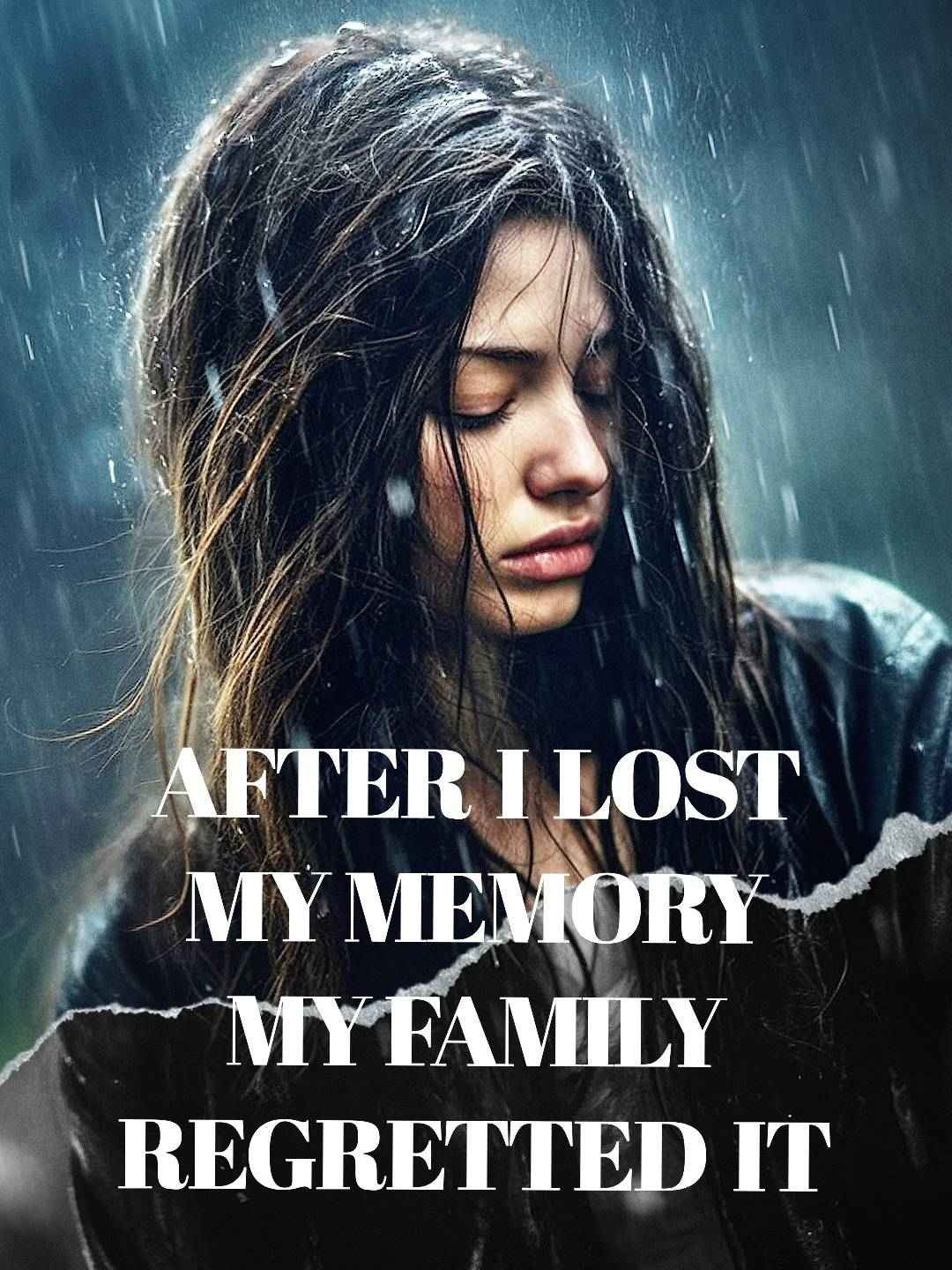
To cheer up my depressed adopted sister Sienna Evans, my parents, Charles Evans and Lyla Evans, didn't dare show me too much love, even locking me in a dark room over seven hundred times. It was all to see her smile. They initially felt guilty about it. Still, eventually, even my most loving brother, Rylan Evans, came to see it as perfectly usual. Only when Sienna's depression started to improve did I finally gather the courage to beg them on my knees to seal up that dark room. But at Sienna's birthday party, I just wore my only T-shirt, and that was enough to make her tear up and ask Charles and Lyla if I didn't like her. Charles, Lyla, and Rylan comforted her while throwing me back into that pitch-black room. "Claire, you're her big sister. You need to be more considerate of your sister's feelings. "If you hadn't insisted on wearing such trashy clothes, your sister wouldn't have gotten so upset. "You're used to this after all these years anyway, so what's one more time?" I huddled in the corner, pulling at my hair, unable to speak. Three days later, they finally let me out, warning me not to make Sienna sad again. But I just stared at them blankly. "I'm sorry, but who are you?"
Limited-time free event: This free viewing activity is jointly launched by ReelShort and FreeDrama. Click the button to download the APP and watch all episodes of After I lost my memory, my family regretted it for free.
In After I lost my memory, my family regretted it, familial devotion is weaponized as control. Claire—the protagonist—is systematically erased: locked in darkness over 700 times not for wrongdoing, but to “cheer up” her adopted sister Sienna. Her parents, Charles and Lyla, rationalize cruelty as sacrifice; her brother Rylan normalizes it. The horror lies not in overt violence, but in the chilling consistency of gaslighting—love redefined as silence, obedience, and self-erasure.
Claire’s amnesia isn’t a plot device—it’s the story’s moral reset button. When she emerges from three days of solitary confinement and asks, *“I’m sorry, but who are you?”*, the question dismantles the entire facade. Her forgotten past forces the audience—and perhaps her family—to confront the truth: their “regret” isn’t remorse for abuse, but panic at losing control. The title After I lost my memory, my family regretted it reveals irony so sharp it cuts both ways: they mourn the loss of a compliant daughter, not the harm they inflicted.
This drama avoids melodrama by grounding trauma in mundane details—the single T-shirt, the repeated phrase “you’re used to this,” the way comfort flows only toward Sienna. It exposes how depression can be misused to justify systemic neglect. Claire’s final blank stare isn’t confusion—it’s dissociation crystallized. Her identity wasn’t stolen by amnesia alone, but by years of being treated as a prop in someone else’s healing narrative.
Download now to experience this haunting exploration of love, guilt, and erasure—only on FreeDrama App.After I lost my memory, my family regretted it is not just a short drama, it’s like a mirror reflecting the struggles and growth of the characters…
This short drama After I lost my memory, my family regretted it is a double impact on visuals and emotions…
Each episode of After I lost my memory, my family regretted it is like a little puzzle…
Limited-time free event: This free viewing activity is jointly launched by ReelShort and FreeDrama. Click the button to download the APP and watch all episodes of After I lost my memory, my family regretted it for free.