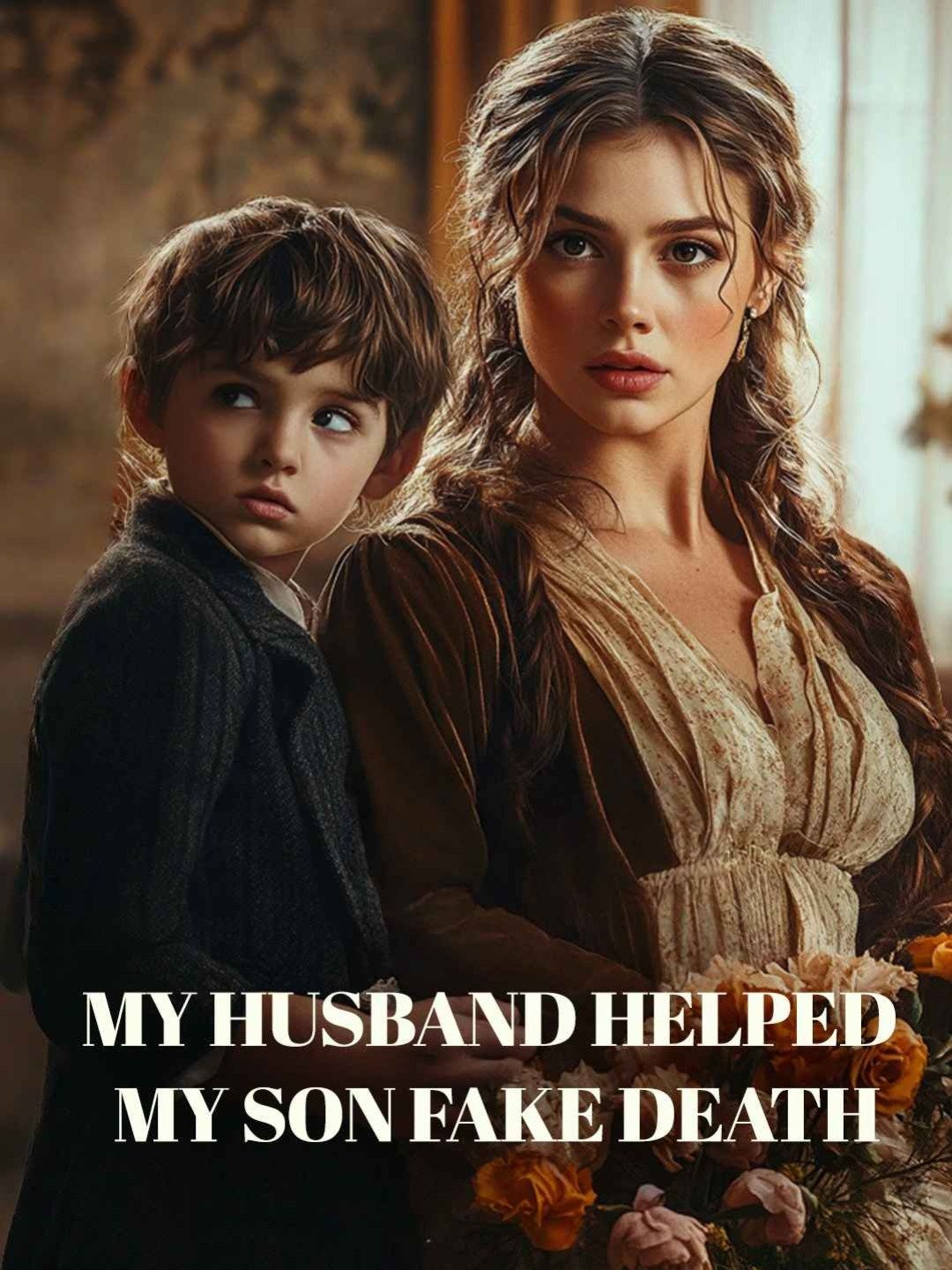
My husband Gideon Lucas said that after his older brother Bruce Lucas died, he couldn't bear to see Bruce's wife Maggie Lucas living as a widow. He volunteered to take care of her and her daughter, adopting Jane and treating her like his own flesh and blood. However, later on, just because our daughter Ruth Lucas scored 2 points higher than Jane on an exam, Gideon mercilessly threw her into the gladiator arena. I knelt on the ground, begging him to spare Ruth, crying as I told him, "She won't survive in a place like that!" But he said coldly, "Doesn't she love competing? Then I'll let her fight to her heart's content." Later, while I held Ruth's mangled body in the arena, sobbing over her torn flesh, Gideon was hosting Jane's coming-of-age ceremony. By chance, I overheard a conversation between Gideon and Maggie. "When Christmas forced you to marry Bruce, who was terminally ill, it was truly unfair to you." "Now that he's finally dead, you can finally become my wife openly." In that moment, I realized this had all been a long-planned scheme. The only person Gideon had ever loved was Maggie, so he never could and never would love Ruth and me. The truth pierced my heart like a blade, leaving me barely able to breathe. Since I was unwanted, leaving would be the best choice.
Limited-time free event: This free viewing activity is jointly launched by ReelShort and FreeDrama. Click the button to download the APP and watch all episodes of My husband sent our daughter to the Colosseum for free.
This harrowing tale—My husband sent our daughter to the Colosseum—unfolds as a chilling psychological drama disguised as family loyalty. Gideon Lucas presents himself as a selfless brother-in-law, adopting his late brother’s daughter Jane and caring for widow Maggie. But beneath the veneer of devotion lies a decades-old obsession—and a cold, calculated betrayal.
The Colosseum isn’t literal; it’s symbolic—a brutal manifestation of Gideon’s warped values. When Ruth outperforms Jane academically, he weaponizes “competition” to justify her exile into mortal danger. His cruelty peaks in the arena scene: Ruth’s mangled body cradled by her mother, while Gideon celebrates Jane’s coming-of-age nearby. The dissonance is devastating—not just emotionally, but thematically—exposing how love, when poisoned by narcissism and long-buried desire, becomes indistinguishable from violence.
The revelation—that Gideon married Bruce’s widow under false pretenses, that Christmas (Bruce’s terminal illness) was merely a convenient obstacle—is the narrative’s emotional fulcrum. My husband sent our daughter to the Colosseum ultimately reframes every prior act: adoption, affection, even grief—as performance. The protagonist’s decision to leave isn’t defeat; it’s reclaiming agency. Her final breathlessness mirrors the audience’s own gasp—raw, real, and unforgettable.
Experience this gripping, layered drama firsthand—download the FreeDrama App now for full access.
My husband sent our daughter to the Colosseum is not just a short drama, it’s like a mirror reflecting the struggles and growth of the characters…
This short drama My husband sent our daughter to the Colosseum is a double impact on visuals and emotions…
Each episode of My husband sent our daughter to the Colosseum is like a little puzzle…
Limited-time free event: This free viewing activity is jointly launched by ReelShort and FreeDrama. Click the button to download the APP and watch all episodes of My husband sent our daughter to the Colosseum for free.