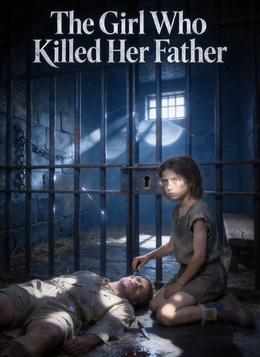
He was the beloved, praised husband of the village, yet at night he tied my mother to a wooden horse, whipping her as he abused her. I watched him stagger from the pool of blood, adjusting his clothes after his cruelty. On the day he sold me, he stole a jade pendant—the emblem of the Duke’s family. When my uncle razed the village, I sent my own father to hell. The village cursed my mother as cruel, never knowing the real killer was me.
Limited-time free event: This free viewing activity is jointly launched by ShortMax and FreeDrama. Click the button to download the APP and watch all episodes of The Girl Who Killed Her Father for free.
The Girl Who Killed Her Father opens with visceral, unflinching intimacy—watching abuse unfold not as spectacle, but as lived trauma. The narrator, a child witness to her father’s monstrous duality—publicly revered, privately sadistic—carries the weight of silenced truth. His nightly rituals of torture against her mother, culminating in the theft of the Duke’s jade pendant during her sale, expose systemic hypocrisy: the village venerates him while erasing her mother’s suffering—and ultimately, her own agency.
The story pivots from victimhood to vengeance with chilling precision. When the uncle’s forces raze the village, the protagonist doesn’t flee—she orchestrates. She doesn’t merely survive; she delivers judgment, sending her father “to hell” with deliberate, quiet finality. This isn’t impulsive rage—it’s the culmination of years of observation, memory, and moral calculus. The villagers’ curse of her mother as “cruel” becomes ironic testimony to their willful blindness, underscoring the film’s central theme: truth is buried not by violence, but by collective denial.
The Girl Who Killed Her Father transcends revenge tropes by centering psychological authenticity over action. Every detail—the wooden horse, the blood pool, the jade pendant—functions as both symbol and evidence. It asks uncomfortable questions about complicity, inherited power, and who gets to define justice when institutions fail. Haunting, lyrical, and morally complex, it lingers long after the final line.
Experience this powerful, emotionally charged narrative—download the FreeDrama App today.
The Girl Who Killed Her Father is not just a short drama, it’s like a mirror reflecting the struggles and growth of the characters…
This short drama The Girl Who Killed Her Father is a double impact on visuals and emotions…
Each episode of The Girl Who Killed Her Father is like a little puzzle…
Limited-time free event: This free viewing activity is jointly launched by ShortMax and FreeDrama. Click the button to download the APP and watch all episodes of The Girl Who Killed Her Father for free.
![[Dubbed]Lady Kelly's Counterattack](https://video3.en-freereels.com/image/95_de223909f62458171a78d265021e85da_8eefe6a3b20b4658901bd66abe3e47ff.jpg)
![[Dubbed] Return of the Racing Legend](https://video3.en-freereels.com/image/95_e287f7c3106b03d0df04493cb863b50d_7078e26b931a4540b5c46a3d9a359765.jpg)